


A beginner mountain biker mostly needs a bike her size, usually a hardtail, plus a helmet, gloves and easy trails. Start with short rides, learn to brake, to look well ahead and to position yourself, then raise the difficulty gradually at your own pace.
Mountain biking (MTB) is more than a sport: it is a way to discover nature, burn energy and feel a real thrill. Yet many women hesitate to start, afraid of not keeping up or of falling. The good news: mountain biking is not all jumps and extreme descents. With a suitable bike and a progression at your own pace, it is open to everyone. This guide to mountain biking for beginners gives you the keys to choosing your gear, enjoying your first rides and building confidence.
Is mountain biking for you, even as a complete beginner?
Mountain biking is the branch of cycling practised off tarmac: forest, mountains, country trails. Unlike a road bike, a mountain bike is built to roll over roots, rocks and slopes. There are several disciplines, from relaxed trail rides to downhill, and Shimano (guide in French) presents cross-country as the ideal discipline to start with.
There is no shortage of reasons to take it up:
- fitness: mountain biking works the heart, legs and core while building endurance and agility;
- nature: it takes you to landscapes and places you would not reach otherwise;
- self-confidence: every feature cleared, every descent controlled is a small victory;
- company: people often ride in groups, and more and more women’s rides and clinics are organised.
Which mountain bike should a beginner choose?
The bike you choose shapes your comfort and safety. Two main families exist to start with:
| Criterion | Hardtail | Full suspension |
|---|---|---|
| Suspension | Front fork only | Front fork and rear shock |
| Ideal terrain | Fire roads, forest, less technical singletrack | Rough, technical terrain |
| Maintenance | Simple | More demanding |
| Budget | More affordable | Higher |
| Who for? | Most beginners | Committed riding or mountains |
Shimano recommends a hardtail to begin with: it offers enough comfort and control for a wide variety of trails while sparing your budget. Go for disc brakes, more powerful and more reliable in the wet.
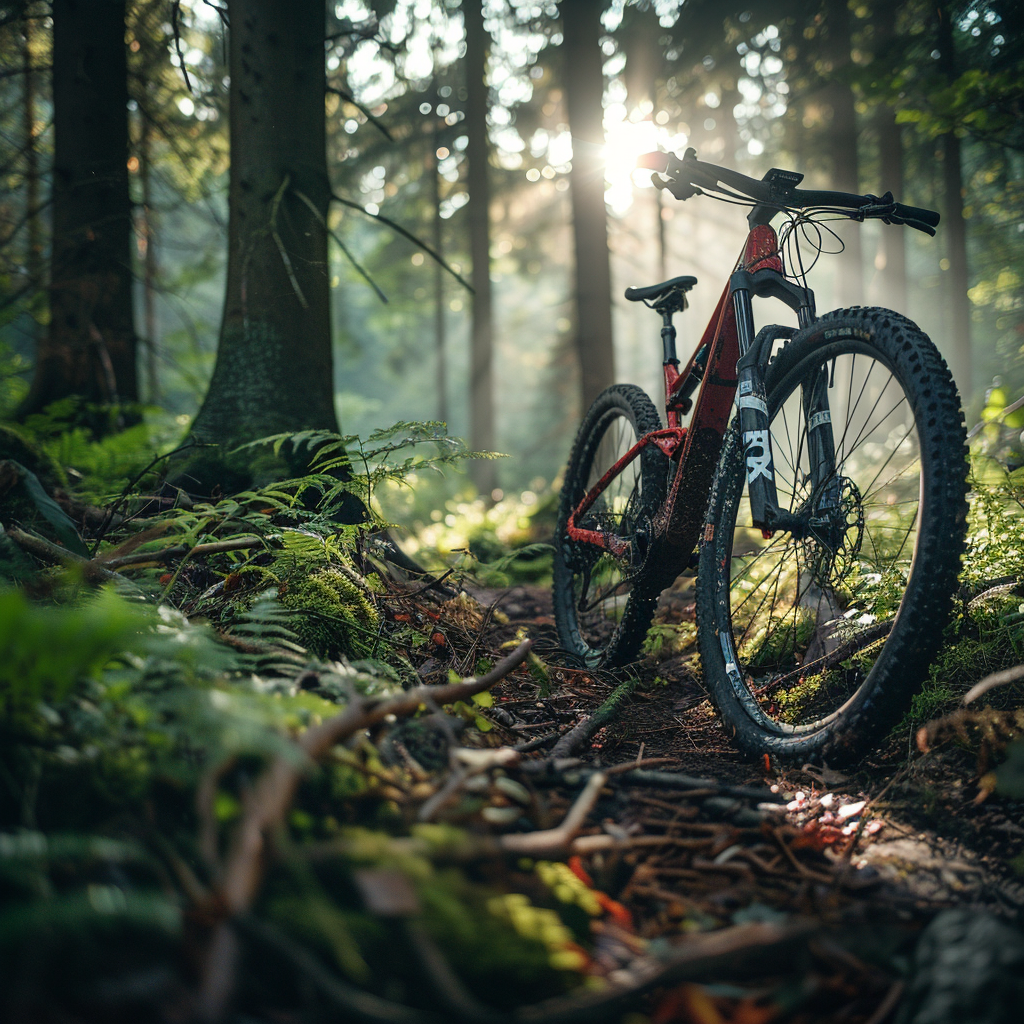
Frame size is the most important criterion. A bike that is too big handles badly and tires you out; one that is too small cramps your position. You must be able to stand over the frame safely, feet on the ground. To find the right size, see our guide women’s MTB frame size: how to choose for your body. Then think about setup: saddle height and fore-aft position, handlebar height and brake-lever reach, to be brought closer if you have small hands.
What kit do you need for your first rides?
There is no need to buy the most expensive gear to start. The women’s cycling brand Liv (tips in French) advises focusing on the essentials:
- a helmet that fits properly, essential from the very first ride;
- gloves, to protect your hands and grip the bars better;
- shoes that are comfortable with a grippy sole;
- breathable clothing, with padded shorts cut for women for comfort;
- a repair kit: tyre levers, spare tube or patch kit, pump and multi-tool.
To go further, read our articles on what to wear mountain biking and on choosing a women’s MTB saddle.
How do you make a success of your first rides?
As a beginner, start on wide, smooth tracks with no obstacles, to get used to the bike. Then work on one skill at a time:
- Vision: look well ahead, where you want to go, not at your front wheel. According to Decathlon (in French), your eyes choose the line and your shoulders steer the bike. In a corner, look at the exit.
- Braking: use both brakes progressively. Brake before the corner, in a straight line, not mid-turn. With disc brakes one finger on each lever is enough; no need to squeeze hard.
- Position: on descents, pedals level, arms and legs bent, hips slightly behind the saddle.
- Gears: shift before a climb, not halfway up it.
- Obstacles: gradually add rocks, roots and small steps.
The Xtremself tip: you never have to ride a section that scares you. Getting off and walking is no failure: it is the best way to keep your confidence. Scout the section on foot, then try it again later. If you can, take a lesson or two with a qualified coach: you will avoid picking up bad habits.
Where can a beginner go mountain biking?
You can ride almost anywhere bikes are allowed: forest tracks, greenways, country trails. Trail centres and bike parks grade their routes by difficulty, usually green for easy, blue for intermediate, then red and black; start with the greens before moving to more technical loops. Local bike shops, clubs and trail apps know the best routes.
Riding with company is reassuring at first. Look for a friendly group where everyone rides at her own pace and nobody minds waiting. Respect other trail users, let them know when you pass and adapt your speed.
How do you look after your mountain bike simply?
Regular maintenance makes the bike safer and more pleasant:
- clean the bike after muddy rides;
- check tyre pressure before you leave: the harder and smoother the ground, the higher the pressure can be;
- lubricate the chain regularly;
- check the brakes and bolt tightness, especially after the first rides on a new bike.
Find all our advice in the mountain biking section.
All our women’s mountain biking features:
- Choosing your bike: women’s MTB frame size
- Comfort and position: choosing a women’s MTB saddle, women’s MTB clothing
Frequently asked questions
No. Mountain biking can be done at any fitness level. Start with short rides on easy tracks: endurance and technique come with regular practice. If you have a health problem or are returning after a long break, ask your doctor.
A hardtail, with a suspension fork at the front and no rear shock, suits most beginners. It is versatile, simpler to maintain and more affordable than a full-suspension bike.
Not necessarily. The most important things are frame size and a setup that fits your body. Women’s models often come in smaller sizes with a suitable saddle and handlebar, which can make fitting easier.
There is no ideal length. Choose a short, easy route you can cut short, and keep energy for the way back. Always carry water and a snack.
Progress in small steps: look well ahead, keep your arms loose and your pedals level, and get off without hesitation if a section intimidates you. A lesson with a coach does a lot for confidence.
