


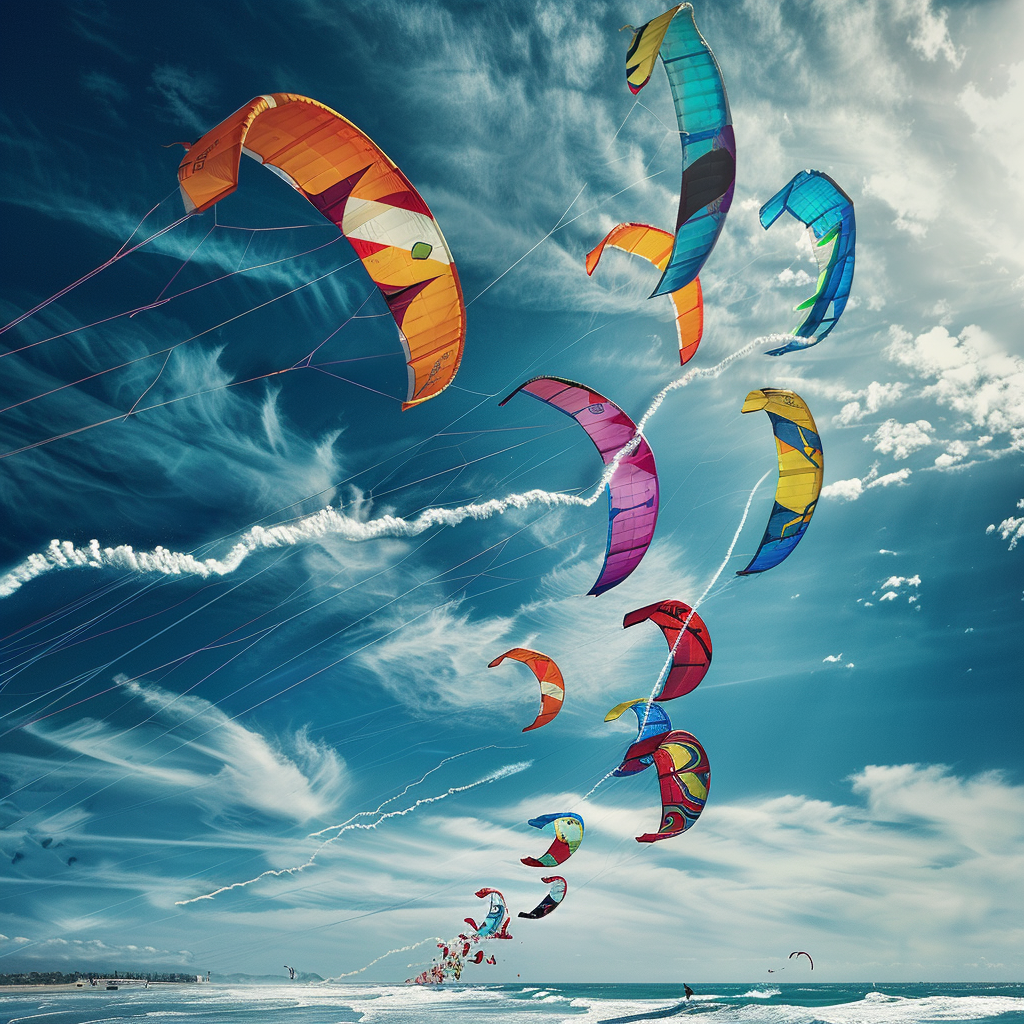
A complete set of kitesurfing equipment includes a kite, a bar with a quick-release system, lines, a board, a harness, a wetsuit and protection (helmet, vest). As a beginner you learn on the school’s gear, then buy the wetsuit and harness first, fitted to your body, before the kite and board.
Kitesurfing attracts more and more women, which is excellent news. But between kite types, boards, harnesses and safety systems, the vocabulary can be off-putting. Choosing your kitesurfing equipment well makes learning safer and more enjoyable, and saves you pointless purchases. This guide goes through each item, with the points to check as a woman, often lighter than the builds standard gear is designed around. Starting from zero? Begin with our kitesurfing guide for beginners.
What does a set of kitesurfing equipment include?
| Item | Job | What to check as a woman |
|---|---|---|
| Kite | Generate pull from the wind | Size matched to your weight, not your instructor’s |
| Bar and lines | Steer the kite and control power | Bar width comfortable for your arm span |
| Quick-release system | Kill the power if something goes wrong | Easy to trigger with your own strength |
| Board | Ride on the water | Size and width matched to your weight |
| Harness | Transfer the pull to your hips | Women’s cut, lower-back support |
| Wetsuit | Protect from cold and sun | Women’s cut, thickness to suit the water |
| Helmet and vest | Protect your head, help you float | Snug fit, no play |
Which kite should a beginner choose?
There are two main families of kites:
- Inflatable kites (LEI, leading-edge inflatable): the most common. They float and relaunch easily from the water. The logical choice for learning.
- Foil kites: with no inflatable structure, they are mostly used for racing, light wind or snowkiting. They are trickier to relaunch after a crash in the water.
Kite size is chosen according to your weight, the wind strength and your level. This is where a lighter woman needs to be careful: in the same wind she needs a smaller kite than a heavier rider. A kite that is too big quickly becomes hard to control. To understand what the numbers mean, read our guide to choosing a kite for your level and the wind.
How does the bar’s safety system work?
The control bar steers the kite and trims its power. Above all, it carries the most important safety device in your kitesurfing equipment. The kitesurf rescue guidelines of the French sea-rescue service SNSM (in French) describe three levels:
- The primary quick release (on the chicken loop): it detaches you from the bar. The kite loses its power and falls.
- The kite leash: after that first release, it keeps you connected to the kite so you do not lose it, without pull.
- The leash release: it separates you from the kite completely if the situation demands it.
These systems are brightly coloured, and how they work varies from brand to brand. The manufacturer F-One, in the user manual for its bars, asks you to trigger each release at least once before and after every use, and never to launch without connecting the leash. It also stresses that an emergency is not the moment to discover these procedures: have them shown to you at a school.
The Xtremself tip: before every session, test your quick release on land, even if you are in a hurry. If it seems to need too much force, say so: a release clogged with salt and sand can be rinsed and serviced.
Which kiteboard for a beginner?
There are three main families of boards:
- The twin-tip: symmetrical, it rides in both directions without switching your feet. The learning board par excellence.
- The directional (surfboard): designed for waves, it takes more experience.
- The hydrofoil: it makes the board “fly” above the water and lets you ride in light wind, but it is for riders who are already independent.
To start, a slightly longer, wider board offers more stability and makes waterstarts easier. A light woman can still handle a shorter board than a heavy man: as with the kite, weight guides the choice. The fins under the board help you hold your line and ride upwind: check their screws regularly.
Waist or seat harness: which should a woman choose?
The harness transfers the kite’s pull to your hips and takes the load off your arms. There are two types:
- The seat harness: worn low, with leg straps. It does not ride up under the bust and gives good support, which often makes it the beginner’s choice.
- The waist harness: freer to move in, it is popular for freestyle and waves, but tends to ride up if you are not yet comfortable.
Women’s models allow for a more defined waist and wider hips. Try it sitting down and under load (most shops have a strap to hang from), not just standing in the shop.
Which protection should you add to your kitesurfing equipment?
Kitesurfing carries real risks. No equipment removes them, but some items reduce them considerably:
- Helmet: F-One considers it essential whenever you use a board leash, because the board can spring back at you. It also protects you during launching and landing.
- Buoyancy or impact vest: it makes restarting in the water easier, cushions falls and helps you swim in. Rules vary by country: in France, for instance, the SNSM guidelines note that a personal flotation device and a light signal are mandatory beyond 300 m (about 330 yards) from shore. Check the regulations where you ride.
- Neoprene wetsuit: the F-One twin-tip user guide recommends a full suit when the water is below 19°C (66°F) and a shorty above. A women’s cut prevents water pooling in the back and chest.
- Line cutter: often built into the harness, it lets you free yourself from tangled lines.
Should you buy kitesurfing equipment new or second-hand?
During your lessons the school supplies all the gear, matched to your weight and the conditions. Use that time to test several kite and board sizes. Then proceed in stages:
- Buy the personal items first: wetsuit, harness and helmet, which have to fit you perfectly.
- Rent the kite and board for your first independent sessions, with advice from the school.
- Then move to second-hand or new. Used gear saves money, but check the canopy, the bladders, the lines and above all the quick-release system, ideally with an instructor.
- Rinse your gear in fresh water after every session and do not leave it in the sun.
Planning a trip to practise? See our winter kitesurfing destinations, and explore all our resources in the kitesurfing section.
Read next in our kitesurfing gear series:
Frequently asked questions
A kite, a bar with a quick-release system and its lines, a board, a harness and a wetsuit suited to the water temperature. A helmet and vest are strongly recommended, especially for beginners.
No. During lessons the school provides the equipment. Buy the wetsuit, harness and helmet first, then the kite and board once you are riding independently.
Yes, mainly harnesses and wetsuits, cut for women’s bodies. For the kite and board, your weight is what matters most.
It is not required everywhere, but it is strongly recommended. The manufacturer F-One considers it essential whenever you use a board leash.
Trigger each release on land before you go out, check that the leash is connected and inspect the condition and rigging of the lines. Have the procedure shown to you at a school.
